When choosing a cloud server or physical host with Singapore CN2 connectivity, traffic billing and burst bandwidth policies directly affect stability and costs. From the perspectives of billing models, burst bandwidth mechanisms, monitoring, and contract review, this article provides practical purchasing and operational recommendations to help sites and applications targeting users in Singapore or the Asia-Pacific region make more informed decisions.
CN2 represents high-quality backbone lines provided by operators, typically used to improve network quality when connecting to mainland China or the Asia-Pacific region. Select Singapore CN2 The main advantages of servers include lower latency, more stable packet loss rates, and better routing control, making them suitable for e-commerce, gaming, and API services that require high access quality. Check the carrier’s coverage and availability before purchasing.
Evaluating traffic requirements should be based on historical traffic volume, peak concurrency, and business types (such as video, downloads, API calls). Reasonably estimate monthly traffic and peak bandwidth, distinguishing between guaranteed bandwidth, monthly subscription bandwidth, and peak burst bandwidth requirements, to avoid service degradation due to insufficient configuration or waste caused by excessive reservation. Proper capacity planning can significantly reduce subsequent adjustment costs.
Common metering models include metering by traffic (per GB), metering by bandwidth (per Mbps on a monthly basis), and hybrid metering. Suitable for traffic-based use in businesses with low initial volumes but stable traffic flow ; Suitable for continuous high-concurrency scenarios based on bandwidth ; The mixed mode offers a guaranteed bandwidth with overage pricing, suitable for services with high variability that require performance guarantees.
Burst bandwidth allows exceeding the guaranteed bandwidth for a short period to handle traffic spikes. Suitable for advertising campaigns, promotions, or scenarios with sudden traffic spikes. However, attention must be paid to the limits on burst duration and frequency, as well as the operator’s billing rules for excess usage. Properly configuring burst strategies can ensure a good user experience in a short time while reducing long-term costs.
When selecting a billing strategy, business stability and budget should be taken into account. For businesses with stable high-volume traffic, prioritize monthly or annual bandwidth packages to reduce unit costs ; For services with low baseline traffic and occasional peaks, metered billing or a hybrid model is more flexible. Costs can be optimized using data packages or discounted plans, but the lock-in period and return policies need to be evaluated.
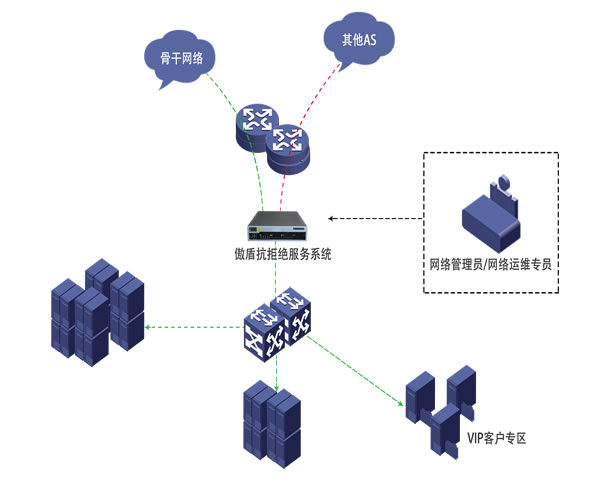
Establish real-time traffic and bandwidth monitoring, and set multi-level alert thresholds to enable timely responses when approaching the guaranteed bandwidth or exceeding it. Monitoring should cover inbound/outbound traffic, concurrent connections, and peak periods. By using traffic analysis tools to identify sources of abnormal traffic, combined with auto-scaling or throttling strategies, unexpected overcharging and service disruptions can be effectively avoided.
When signing the contract, pay close attention to the flow metering criteria, burst bandwidth rules, billing cycle, overage pricing, and flow statistics criteria (the statistics provided by the operator may differ from those of the user). SLA terms, the ability to export traffic reports, and channels for disputing abnormal charges are required to ensure there is a basis for action in case of discrepancies or incorrect billing, allowing for timely recourse.
Optimization suggestions include selecting appropriate access bandwidth and line redundancy, deploying load balancing and CDN, and properly configuring caching strategies and compressed transmission. The pressure on the main link can be reduced through traffic shunting, rate-limiting strategies, and service layering. At the same time, regular link quality assessments are conducted, and based on the results, the operator is adjusted or routing strategies are changed to ensure long-term stability.
For purchasing CN2 servers in Singapore, it is recommended to first assess traffic and bandwidth requirements based on business characteristics, select the most suitable billing model, and clarify the rules for bursty bandwidth usage. Establishing a comprehensive monitoring, alerting, and contract review mechanism, combined with optimization techniques such as CDN and caching, can effectively control costs while ensuring access quality. Be sure to confirm the billing terms and SLAs with the supplier before making a purchase to avoid future disputes.
- Latest articles
- Deployment Guide: Getting Started from Scratch and Completing High-Availability Architecture Design with Vietnamese CN2 Service Providers
- Evaluation of performance and scalability based on technical specifications in the U.S. standalone server price list
- Network latency and bandwidth metrics that must be considered when choosing native IPs from Vietnam and Hong Kong
- Quick Start Guide to Deploying Hong Kong CN2 Lightweight Cloud from Scratch
- Practical Operations: Server Monitoring, Alerts, and Automated Operations for Korean Cloud Services
- Case Study: How a Website Group Boosts Cross-Border Conversion Rates in Korean E-Commerce
- Network providers and routing testing methods to check before purchasing a Japanese dial-up VPS
- Design approach for building a multi-region disaster recovery system using Malaysian VPS CN2 GIA
- Game optimization suggestions: Optimization steps for Dota 2 auto-chess servers that keep using Taiwanese settings
- Practical tips to help you reduce server rental costs in Cambodia: A comparison of long-term and short-term rentals
- Popular tags
-

Application and advantages of Sanwang CN2 line in Singapore
This article discusses the application and advantages of the three network CN2 lines in Singapore and analyzes its performance in network connection, stability and security. -
how long does it take to maintain a singapore server to ensure service stability
understand the maintenance cycle of singapore servers and best practices to ensure service stability, helping businesses improve network performance and user experience. -

Singapore server English version usage guide helps you get started easily
This article provides you with a guide to using the English version of Singapore server, which helps you to easily get started and understand its features, settings and optimizations.